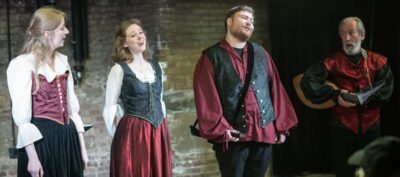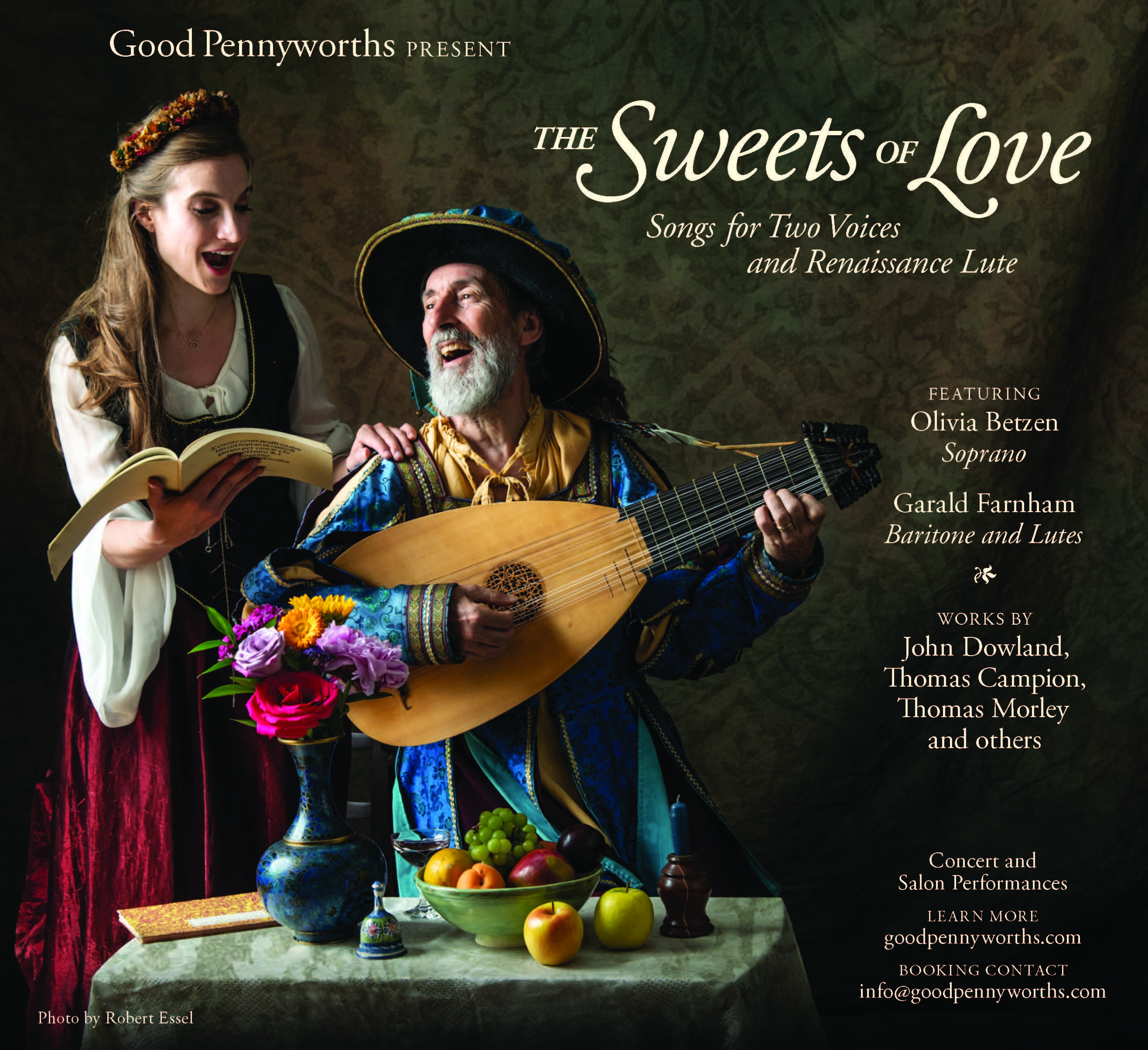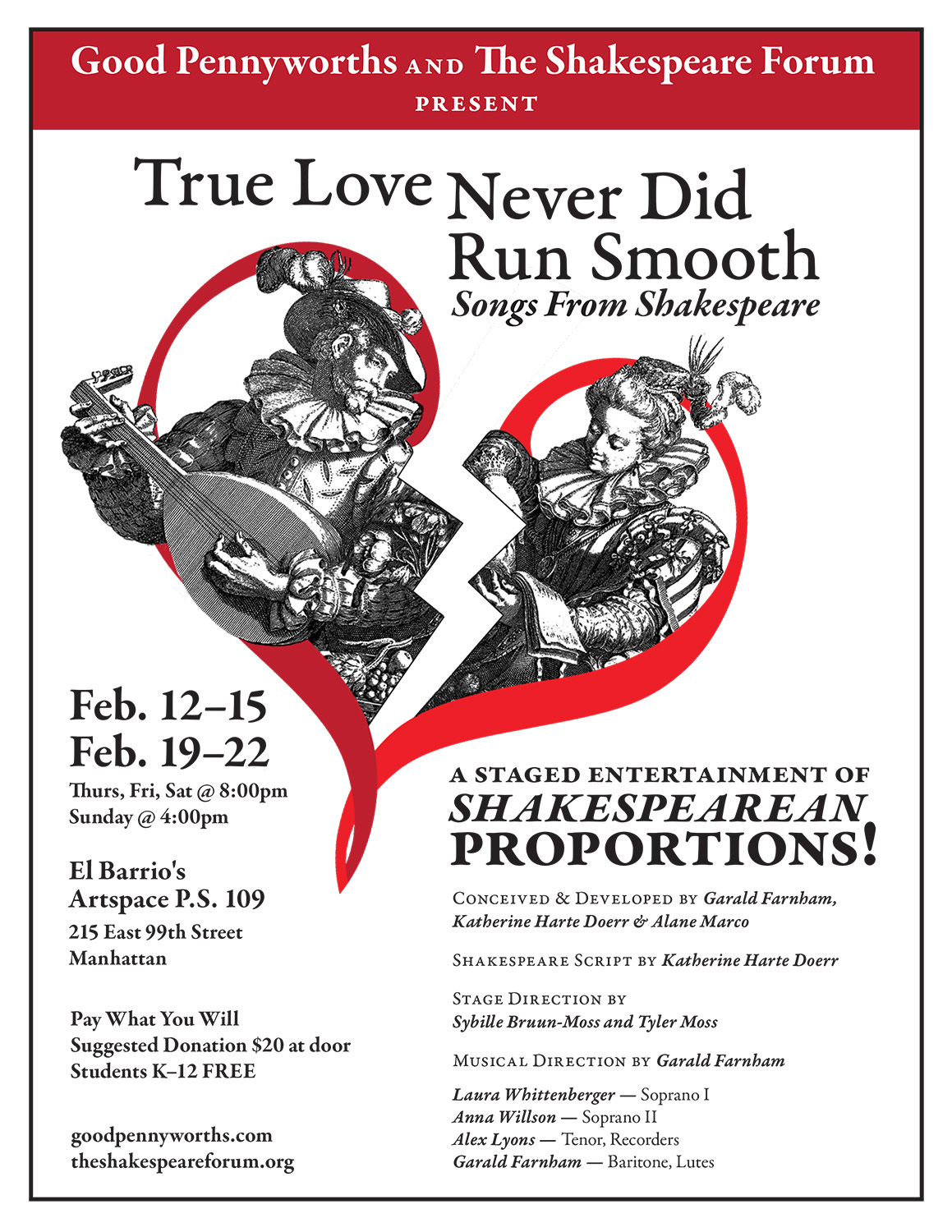
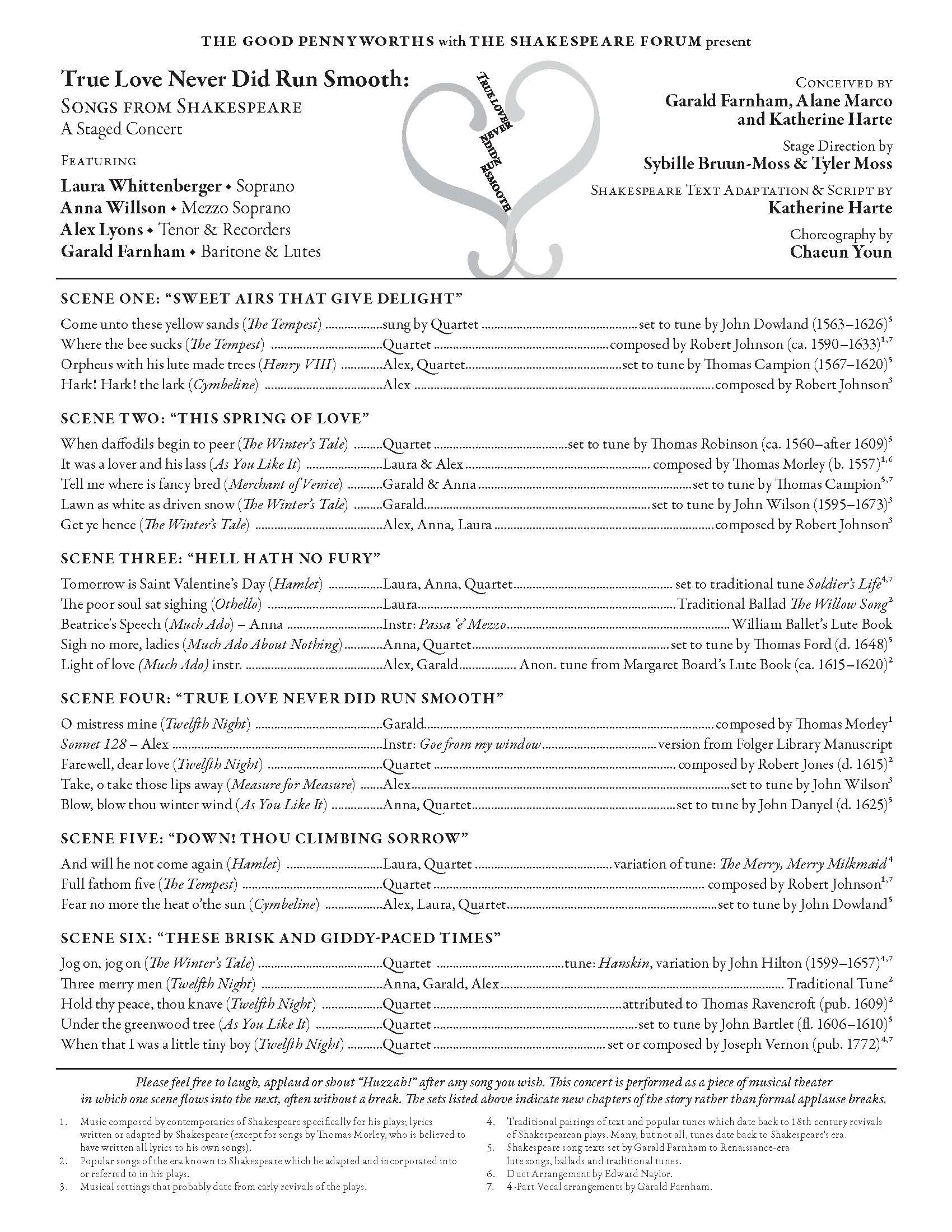
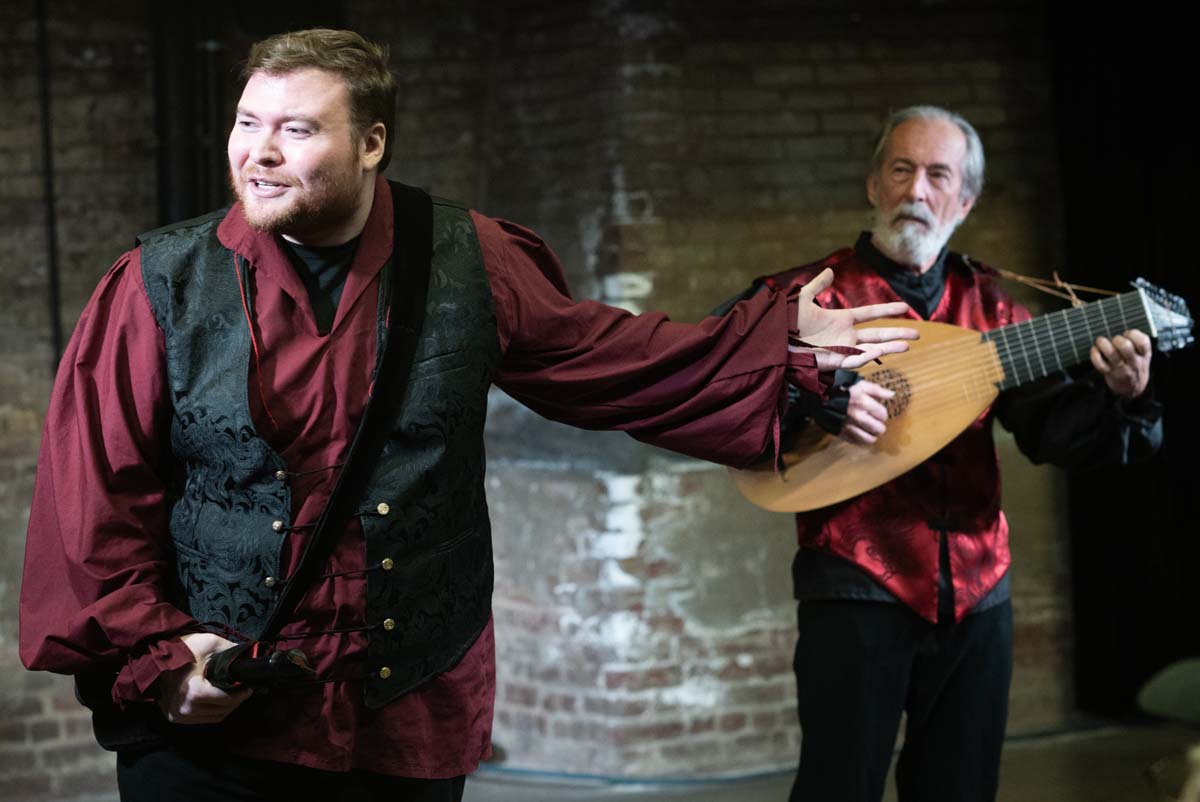
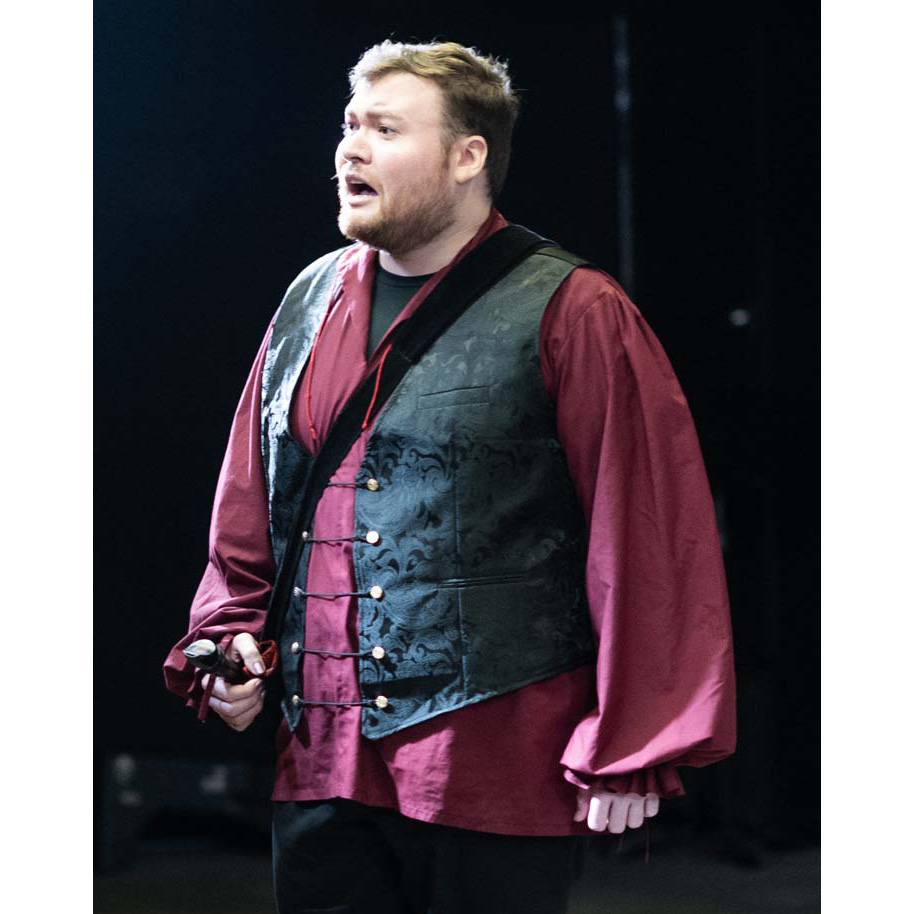
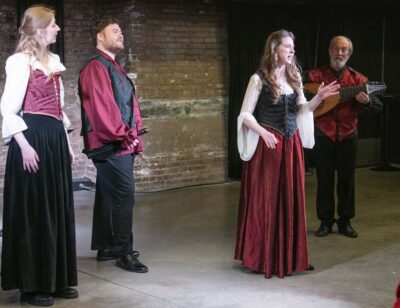
True Love Never Did Run Smooth: Songs from Shakespeare showcases poetry that was intended to be sung. Renaissance music was very vibrant when Shakespeare was writing his plays. Some of the actors in his troupe were trained musicians so he often included songs for them to sing. The following poetry from Shakespeare’s canon of plays was most likely sung. Sometimes the songs enhanced the plot, sometimes it covered a scene change, and occasionally he just stuck in a beautiful song. Here are the full lyrics for the program, videos from the performance can be seen here. All still photos by Robert Essel.
Come Unto These Yellow Sands (The Tempest, I.2, Ariel) set to John Dowland 1597
Come unto these yellow sands
And then take hands, and then take hands,
Curtsied when you have and kissed
The wild wave whist, the wild wave whist.
Foot it featly here and there;
And sweet Sprites, the burthen bear,
Hark, hark! bow-wow, the watch Dogs bark,
Hark, hark! bow-wow, the watch Dogs bark.
Hark, hark, hark! I hear, I hear
The strain of strutting Chanticleer
Cry cock-a diddle-diddle dow,
Cry cock-a diddle-diddle dow.
Where the Bee Sucks (The Tempest, V.1, Ariel) by Robert Johnson ca. 1610
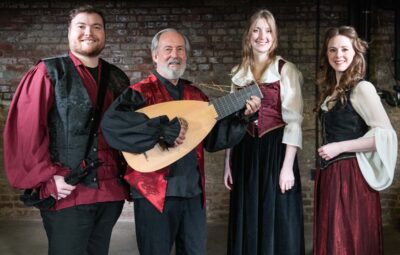
Where the Bee Sucks is one of a few songs that scholars believe to have been composed by Robert Johnson, the composer most closely associated with William Shakespeare, specifically for the original production of The Tempest. The play was performed for James I in 1611, when Johnson was active as a court musician. The song survives in various 17th c. manuscripts with melody and bass line, and was published in John Wilson’s Cheerfull Ayres or Ballads (1660). Garald arranged the four-part vocals for this setting that was performed live in concert by Laura Whittenberger, Anna Willson, Alex Lyons and Garald Farnham at El Barrio’s Artspace P.S. 109, NYC, on February 21, 2026.
Where the Bee sucks, there suck I,
In a Cowslips bell, I lie,
There I couch when Owls do cry,
On a Bat’s back I do fly after summer merrily.
Merrily, merrily, shall I live now,
Under the blossom that hangs on the Bow.
Orpheus with His Lute (Henry VIII, III.1, a musician) set to Thomas Campion 1613
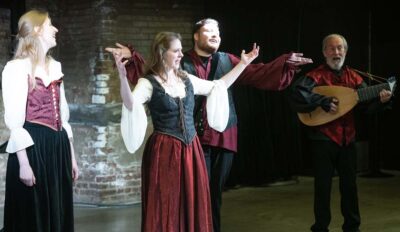
The original music for Orpheus with His Lute does not exist. This arrangement was set by Garald to a Thomas Campion song with four existing vocal parts. It was performed live in concert by Alex Lyons with Laura Whittenberger, Anna Willson, and Garald Farnham at El Barrio’s Artspace P.S. 109, NYC, on February 21, 2026.
Orpheus with his Lute made Trees,
And the Mountain tops that freeze,
Bow themselves when he did sing,
To his Music, Plants and Flowers
Ever sprung; as Sun and Showers,
There had made a lasting Spring, a lasting Spring.
Everything that heard him play,
E’vn the Billows of the Sea,
Hung their heads, and then lay by.
In sweet Music is such Art,
Killing care, and grief of heart,
Fall asleep, or hearing die, or healing die.
Hark! Hark! the Lark (Cymbeline, II.3, a musician) by Robert Johnson ca. 1610
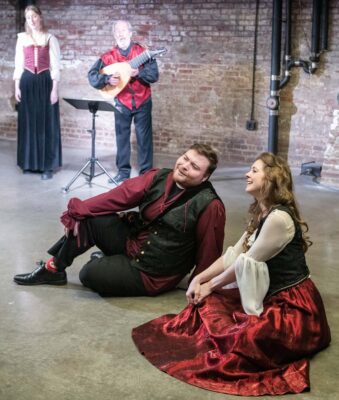
Hark! Hark! the Lark exists in manuscript form as a melody with bass line. The song is anonymous, but attributed to Robert Johnson on stylistic grounds since he was the composer most closely associated with William Shakespeare acting company, specifically for the original production of Cymbeline. Patrick O’Brien contributed additional voicing to the lute part. This arrangement was performed live in concert by Alex Lyons and Garald Farnham at El Barrio’s Artspace P.S. 109, NYC, on February 21, 2026.
Hark! Hark! the Lark at Heaven’s gate sings,
And Phoebus ‘gins to rise.
The winking Mary buds begin
To ope their Golden eyes;
With everything that pretty is
My lady sweet, arise, arise, arise,
My lady sweet arise.
When Daffodils Begin to Peer (The Winter’s Tale, IV.3, Autolycus) set to Thomas Robinson 1603
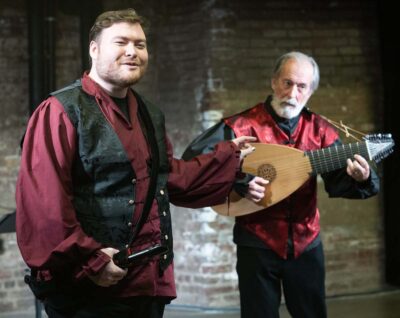
When Daffodils Begin to Peer is an autobiographical song, used as a soliloquy in the play to tell Autolycus’ back story and set the scene — the advent of spring. A ‘doxy’ is the vagabond’s unmarried female companion. ‘Pugging’ means thieving or cheating and the theft of the white sheets hanging on the line would provide the wherewithal to purchase a quart of ale. ‘Aunt’ here means merely a wanton woman, not a bawd or prostitute. No extant music survives, so Garald chose to set the text to an instrumental lute solo by Thomas Robinson which suits the lyrics quite well. He arranged the four vocal parts from Robinson’s lute harmony. This arrangement was performed live in concert by Laura Whittenberger, Anna Willson, Alex Lyons and Garald Farnham at El Barrio’s Artspace P.S. 109, NYC, on February 21, 2026.
When Daffodils begin to peer,
With heigh the Doxy over the dale,
Why then comes in the sweet o’the year,
For the red blood reigns in the Winter’s pale.
The white sheet bleaching on the hedge,
With Heigh! the sweet birds, oh how they sing!
Doth set my pugging tooth an edge;
For a quart of Ale is a dish for a King.
The Lark, that tirra-Lyra chants,
With heigh! with heigh! the Thrush and the Jay:
Are Summers songs for me and my Aunts
While we lie tumbling in the hay.
It Was a Lover and His Lass (As You Like It, V.3, two Pages) by Thomas Morley 1600
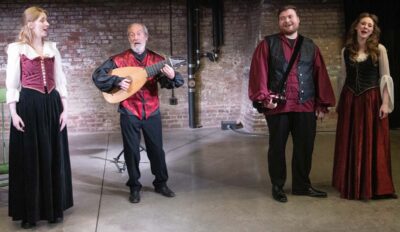
It Was a Lover and His Lass was published by Thomas Morley in 1600, around the time of the first production of the play. The lyrics could be Morley’s, if not Shakespeare’s, and this tune is almost certainly the one performed in the original production. We are using Edward Naylor’s duet vocal arrangement published in 1927, with lute arrangement reworked from Morley’s by Garald Farnham and Patrick O’Brien. This arrangement was performed live in concert by Laura Whittenberger, Alex Lyons and Garald Farnham at El Barrio’s Artspace P.S. 109, NYC, on February 21, 2026.
It was a Lover and his Lass,
With a hey, and a ho, and a hey nonino,
That o’er the green corn fields did pass.
In Springtime, in Springtime,
The only pretty ring time
When Birds do sing hey ding-a-ding-a-ding,
Sweet Lovers love the spring.
In Springtime, in Springtime,
The only pretty ring time
When Birds do sing hey ding-a-ding-a-ding,
Sweet Lovers love the spring.
Between the acres of the Rye,
With a hey …
These pretty Country folk would lie.
In Springtime …
And therefore take the present time,
With a hey …
For love is crowned with the prime.
In Springtime …
Tell Me Where is Fancy Bred (Merchant of Venice, III.2, a musician) set to Thomas Campion 1618
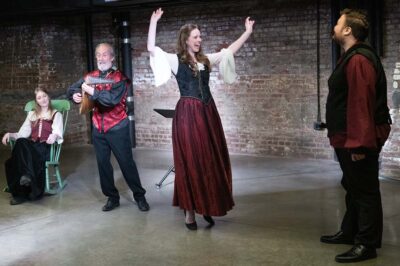
Tell Me Where is Fancy Bred asks where does love (fancy) come from? Is it emotional (“in the heart”) or is it intellectual (“in the head”). The song answers that fancy begins in the eyes — not the heart or the head. However, it also dies there. Fancy can be deceiving, because it is based on outward beauty/appearance, rather than any inner qualities. In the play, the song gives Bassanio clues about which casket to choose (i.e. the plain, lead one). As no extant setting exists, Garald has set it to a lute song in four parts by Thomas Campion. This arrangement was performed live in concert by Anna Willson, and Garald Farnham at El Barrio’s Artspace P.S. 109, NYC, on February 21, 2026.
Tell me where is fancy bred,
Or in the heart, or in the head:
How begot, how nourished.
Reply, reply, reply.
It is engendered in the eyes,
With gazing fed, and fancy dies,
In the cradle where it lies:
Let us all ring Fancy’s knell.
I’ll begin it ding dong bell.
Ding dong ding dong
Ding dong ding dong bell.
Lawn as White as Driven Snow (The Winter’s Tale, IV.3 , Autolycus) ca. 1615
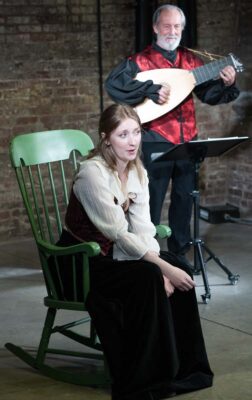
Lawn as White as Driven Snow was published in John Wilson’s book, Cheerfull Ayres or Ballads (1660), and most people attribute it to him. The song exists in manuscript form for a melody with bass line. However, some scholar’s research suggests that the tune is earlier and may be by Robert Johnson. Since Johnson wrote a tune for ‘Get Ye Hence,’ which follows this song in the play, we assume that he probably wrote tunes for all of the songs in The Winter’s Tale. This arrangement was performed live in concert by Garald Farnham at El Barrio’s Artspace P.S. 109, NYC, on February 21, 2026.
Lawn as white as driven Snow,
Cypress black as ere was Crow,
Gloves as sweet as Damask Roses,
Masks for faces, and for noses:
Bugle bracelet, Necklace Amber,
Perfume for a Ladies Chamber:
Golden Quoifs, and Stomachers
For my Lads, to give their dears:
Pins, and poking sticks of steel.
What Maids lack from head to heal:
Come buy of me, come: come buy, come buy,
Buy Lads, or else your Lasses cry: Come buy.
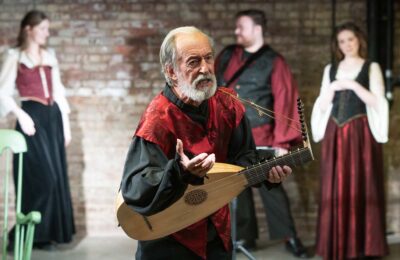
Get Ye Hence (The Winter’s Tale, IV.3 , Autolycus, Dorcas, Mopsa) by Robert Johnson ca. 1610
Get Ye Hence is unusual in format. This song sounds more like operatic recitative than art song (though the subject matter is quite funny and undignified). Written by Robert Johnson, most likely for the original production, the song survives in manuscript form as a melody with bass line. Patrick O’Brien and Garald Farnham arranged the lute part we are using for this performance. This arrangement was performed live in concert by Laura Whittenberger, Anna Willson, Alex Lyons and Garald Farnham at El Barrio’s Artspace P.S. 109, NYC, on February 21, 2026.
Tenor: Get you hence, for I must go
Where it fits not you to know.
Alto: Whither?
Soprano: Oh, whither?
Alto: Whither?
Soprano: It becomes thy oath full well,
Thou to me thy secrets tell.
Alto: And Me too: let me go thither:
Soprano: Or thou go’st to Grange, or Mill:
Alto: If to either thou dost ill.
Tenor: Neither,
Alto: What neither?
Tenor: Neither:
Alto: Thou hast vow’d thy Love to me.
Soprano: Thou hast sworn my love to be:
Then whither go’st? Say whither, whither?
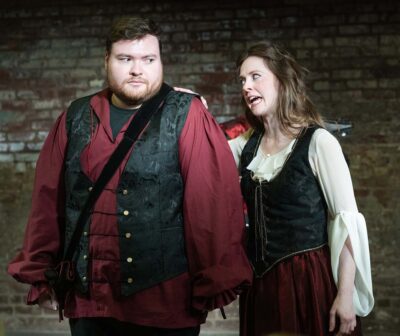
Tomorrow is Saint Valentine’s Day (Hamlet, IV.5, Ophelia) anonymous tune before 1650
Tomorrow is Saint Valentine’s Day is one of Ophelia’s mad songs. It is set to the tune A Soldier’s Life and became associated with the song through late 18th century productions at the Drury Lane Theatre, with the pairing later published in Charles Knight’s Pictorial Edition of the Works of Shakespeare (1838–43). This tune does date to Shakespeare’s time. This arrangement was performed live in concert by Laura Whittenberger, Anna Willson, and Garald Farnham at El Barrio’s Artspace P.S. 109, NYC, on February 21, 2026.
Tomorrow is Saint Valentine’s Day,
All in the morning be time,
And I a Maid at your Window
To be your Valentine.
Then up he rose, and donned his clothes
And dupped the chamber door,
Let in a Maid, that out a Maid,
Never departed more.
By gis, and by Saint Charity,
Alack, and fie for shame!
Young men will do’t, if they come to’t,
By Cock they are to blame.
Sweet prince before you tumble me,
You promis’d me to Wed:
So would I’ha done by yonder Sun,
And thou hadst not come to my bed.
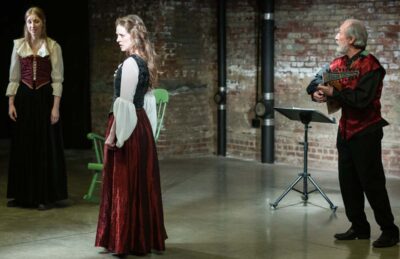
The Willow Song (Othello, IV.3, Desdemona), anonymous ca.1583
The Poor Soul Sat Sighing is Shakespeare’s adaption of the lyrics of the original eight verse ballad for a woman to sing. He broke them up into the dialogue of a scene in Desdemona’s bedchamber. This anonymous tune for this text is found in manuscript form from the time period for voice with lute accompaniment. This arrangement was performed live in concert by Laura Whittenberger and Garald Farnham at El Barrio’s Artspace P.S. 109, NYC, on February 21, 2026.
The poor Soul sat sighing by a Sycamore tree,
Sing all a green Willow;
With her hand upon her bosom, her head upon her knee,
O Willow, Willow, Willow
O willow, willow, shall be my garland.
Her fresh Streams ran by her, and murmured her moans,
Sing all a green willow;
Her fresh tears fell from her, and softened the stones.
O willow, willow, willow
O willow, willow, shall be my garland.
Sing all a green willow,
Willow, willow, willow,
O all a green willow must be my garland.
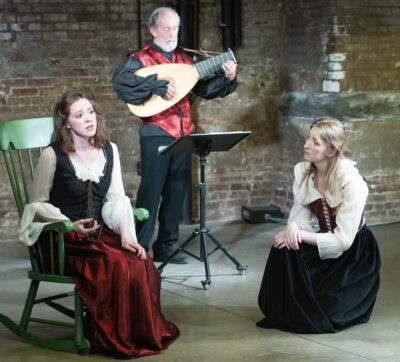
Sigh no More, Ladies (Much Ado About Nothing, II.3, Balthazar) set to Thomas Ford 1607
The original music for Sigh no More, Ladies does not exist. Garald set the lyrics to four-part lute song by Thomas Ford that fits the meter. This arrangement was performed live in concert by Anna Willson with Laura Whittenberger, Alex Lyons and Garald Farnham at El Barrio’s Artspace P.S. 109, NYC, on February 21, 2026.
Sigh no more, Ladies, sigh no more,
Men were deceivers ever,
One foot in Sea and one on shore,
To one thing constant never,
Then sigh not so, but let them go
And be you blithe and bonny,
Converting all your sounds of woe,
Into Hey, hey nonny, nonny.
Sing no more ditties, sing no more,
Of dumps so dull and heavy’
The fraud of men was ever so,
Since summer first was leavy;
Then sigh not so, but let them go
And be you blithe and bonny,
Converting all your sounds of woe,
Into Hey, hey nonny, nonny.
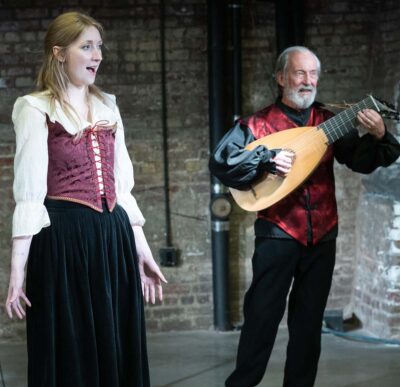
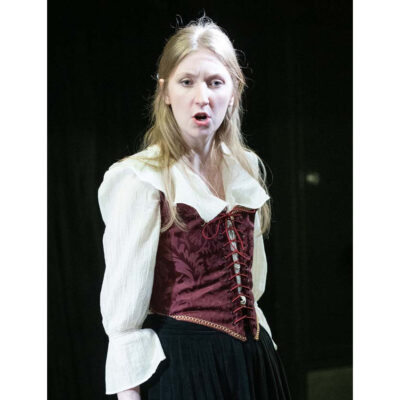
Light o’ Love (Much Ado About Nothing, III.4, Margaret, Beatrice) Anonymous ca. 1615
The title of this lute solo, Light of Love is mentioned by Margaret when she teases Beatrice for pretending to be sick. It is an anonymous tune found in the Margaret Board Lute Book. Margaret Board was the daughter of a wealthy merchant and a student of John Dowland. She collected many lute pieces — now considered masterworks of the Elizabethan and Jacobean eras — in her lute book. This arrangement was performed live in concert by Laura Whittenberger, Anna Willson, Alex Lyons and Garald Farnham at El Barrio’s Artspace P.S. 109, NYC, on February 21, 2026. It was choreographed by Chaeun Youn.
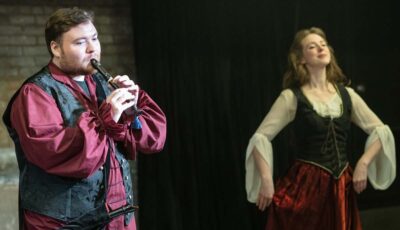
Farewell, Dear Love (Twelfth Night, II.3, Toby Belch, Feste) by Robert Jones 1600
Farewell, Dear Love was used as a banter between Sir Toby and Feste to tease Malvolio, in some of the cleverest words devised by the Bard. The song pre-existed the play and was already popular. Shakespeare took advantage of the fact that the audience knew the words and would get the references. We have taken the original Robert Jones song and turned it into a little four-character opera buffo about two lovers having a tremendous fight. This arrangement was performed live in concert by Alex Lyons, Anna Willson, Laura Whittenberger and Garald Farnham at El Barrio’s Artspace P.S. 109, NYC, on February 21, 2026.
Tenor: Farewell dear love, since thou wilt needs be gone
Mine eyes do show my life is almost gone.
Baritone: Nay, you will never die, so long as you can spy.
Both: There be many mo’, tho’ that she do go?
Tenor: There be many mo’ I fear not.
Baritone: Why then let her go, I care not.
Alto: Farewell, farewell since this I know is true
I will not spend more time being wooed by you.
Soprano: But will ye seek elsewhere?
Alto: If I may find love there!
Both: Shall I (Shall you) bid him go? What and if I do?
Soprano: Shall I bid him go and spare not?
Oh no no no no, I dare not.
Alto: Ten thousand times farewell:
Tenor: Yet stay awhile
Sweet kiss me once; sweet kisses time beguile.
Both: I have no power to move. How now am I in love?
Wilt thou (I must) needs be gone. Go then, all is one.
Tenor: Wilt thou needs be gone?
Soprano: O hie thee!
Tenor: Nay, stay and no more deny me.
Alto: Farewell, adieu, you seem loath to depart
Tenor: Why bid adieu to her that holds my heart?
But seeing I must lose thy love, which I did choose.
Go thy ways for me, Since it may not be
Soprano: Go thy ways for me, Since it may not be.
Tenor: Go thy ways for me,
Soprano: O whither?
Tenor: Go, but where I may come thither.
Tenor: What shall I do? My love is now departed.
Quartet: He (She) is not fair and he (she) is cruel hearted.
She (I) will not be entreated with prayers oft repeated
If she (I) come no more, Shall I (he) die therefore?
If she (I) come no more, what care I?
Faith let me go, or come or tarry.
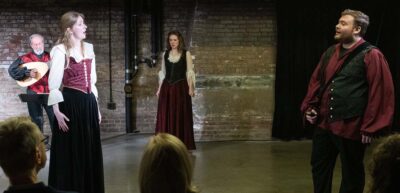
Take, O Take Those Lips Away (Measure for Measure, IV.1, a boy) by John Wilson? ca. 1615
The first verse of Take, O Take Those Lips Away is arguably by Shakespeare, written to advance the plot of the play, while second verse is from The Bloody Brother by John Fletcher. This setting was published by John Wilson in Cheerfull Ayres (1660). Scholars guess that Wilson wrote it for a revival, as Wilson would have been a mere stripling when the play was first produced, or that it is Wilson’s reworking of an earlier Robert Johnson tune. (John Wilson was Johnson’s successor as resident composer for Shakespeare’s company and likely had access to Johnson’s old manuscripts.) This arrangement was performed live in concert by Alex Lyons and Garald Farnham at El Barrio’s Artspace P.S. 109, NYC, on February 21, 2026.
Take, o take those lips away,
That so sweetly were forsworn,
And those eyes: the break of day
Lights that do mislead the Morn;
But my kisses bring again,
Seals of love, but sealed in vain.
Hide, o hide those hills of snow
Which thy frozen blossom bears
On whose tops the pinks that grow
Are of those that April wears.
But first set my poor heart free
Bound in those joy chains by thee.
Blow, Blow Thou Winter Wind (As You Like It, II.7, Amiens) John Danyel 1606
The original music for Blow, Blow Thou Winter Wind does not exist. The lyrics were first paired with John Danyel’s lute song by an English group in the 1950s. Garald used the original Danyel source for the four vocal parts, and Patrick O’Brien contributed to the lute accompaniment. This arrangement was performed live in concert by Anna Willson, with Laura Whittenberger, Alex Lyons and Garald Farnham at El Barrio’s Artspace P.S. 109, NYC, on February 21, 2026.
Blow, blow, thou winter wind,
Thou art not so unkind,
As man’s ingratitude.
Thy tooth is not so keen,
Because thou art not seen,
Although thy breath be rude.
Heigh ho, sing heigh ho, unto the green holly,
Most friendship is feigning, most Loving mere folly.
Then heigh ho the holly, this life is most jolly.
Freeze, freeze, thou bitter sky
Thou dost not bite so nigh,
As benefits forgot:
Though thou the waters warp,
Thy sting is not so sharp,
As friends remembered not.
Heigh ho, sing heigh ho, unto the green holly,
Most friendship is feigning, most Loving mere folly.
Then heigh ho the holly, this life is most jolly.
And Will He Not Come Again (Hamlet, IV.5, Ophelia) Anonymous ca. 1600
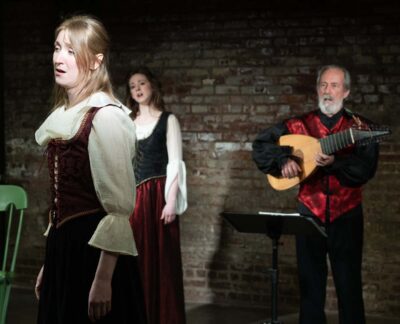
Another of Ophelia’s ‘mad songs,’ And Will He Not Come Again is a 17th c. variant of The Merry, Merry Milkmaids from the Playford book of country dances (1651). The variant is in a minor key, which makes sense given the subject matter of the song. The source for this pairing is again Charles Knight (1838–43), from original Drury Lane Theatre records dating to the late 1700s. This arrangement was performed live in concert by Laura Whittenberger with Anna Willson, Alex Lyons, and Garald Farnham at El Barrio’s Artspace P.S. 109, NYC, on February 21, 2026.
And will he not come again
And will he not come again?
No, no, he is dead, go to thy deathbed;
He never will come again.
His beard was as white as snow,
All flaxen was his poll.
He is gone, he is gone, and we cast away moan.
God ‘a’ mercy on his soul.
Full Fathom Five (The Tempest, I.2, Ariel) by Robert Johnson ca. 1610
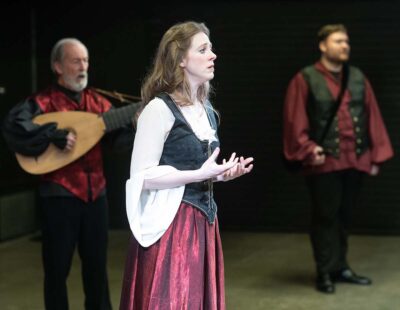
Full Fathom Five is another song very likely to have been used in the original production of The Tempest. It survives in manuscript form as a melody and bass line. Garald arranged the four-part vocals. The play was performed for James I in 1611, when Johnson was active as a court musician. This arrangement was performed live in concert by Laura Whittenberger, Anna Willson, Alex Lyons and Garald Farnham at El Barrio’s Artspace P.S. 109, NYC, on February 21, 2026.
Full fathom five thy (my) Father lies,
Of his bones are Coral made:
Those are pearls that were his eyes,
Nothing of him that doth fade,
But doth suffer a Sea-change
Into something rich, and strange:
Sea Nymphs hourly ring his knell.
Hark now I hear them. Ding, dong bell.
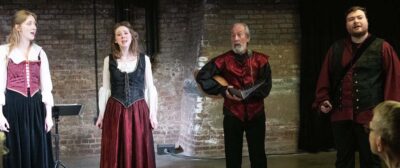
Fear No More the Heat o’the Sun (Cymbeline, IV.2, Guiderius/Arviragus) set to John Dowland 1600
There is no extant music for Fear No More the Heat o’the Sun and no suggestion of an older pairing survives. Garald has set the text to a lesser-known four-part lute song by Dowland which suits the theme and scansion of the lyrics. This arrangement was performed live in concert by Alex Lyons, Laura Whittenberger, Anna Willson and Garald Farnham at El Barrio’s Artspace P.S. 109, NYC, on February 21, 2026.
Fear no more the heat o’th’ Sun,
Nor the furious Winter’s rages,
Thou thy worldly task hast done,
Home art gone and ta’en thy wages.
Golden Lads, and Girls all must,
As Chimney Sweepers come to dust.
Fear no more the crown o’th’ Great,
Thou art past the Tyrant’s stroke,
Care no more to cloth and eat,
To thee the Reed is as the Oak:
The Scepter, Learning, Physic must,
All follow this and come to dust.
Fear no more the Lightning flash,
Nor th’all dreaded Thunderstone.
Fear not Slander, Censure rash,
Thou hast finished Joy and moan,
All Lovers young, all Lovers must,
Consign to thee and come to dust.
No Exorciser harm thee,
Nor no witchcraft charm thee.
Ghost unlaid forbear thee,
Nothing ill come near thee.
Quiet consummation have,
And renowned be thy grave.
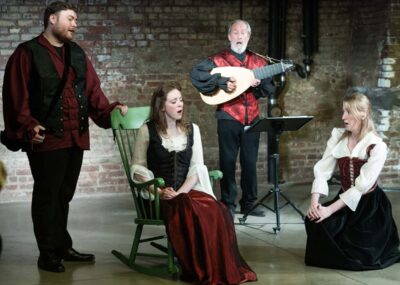
Jog On (The Winter’s Tale, IV.3, Autolycus) Anonymous ca. 1600
Jog On is set to a variation of the tune known as Jog On in John Playford’s book of country dances (1651) or as Hanskin in Queen Elizabeth’s Virginal Book. This tune was adapted by John Hilton for the Shakespeare text and it was probably used in a revival. Garald arranged the four vocal parts from the earliest known setting of the tune, a harpsichord solo with no text. This arrangement was performed live in concert by Laura Whittenberger, Anna Willson, Alex Lyons and Garald Farnham at El Barrio’s Artspace P.S. 109, NYC, on February 21, 2026.
Jog on, jog on, the footpath way,
And merrily hent the Stile-a
A merry heart goes all the day
Your sad tires in a Mile-a.
Your paltry money bags of gold,
What need have we to stare for
When little or nothing soon is told
And we have the less to care for:
Cast care away, care away, let sorrow cease
A fig for Melancholy,
Let’s laugh and sing, laugh and sing or if you please
We’ll frolic with sweet Molly.
Jog on, jog on, the footpath way,
And merrily hent the Stile-a
A merry heart goes all the day
Your sad tires in a Mile-a.
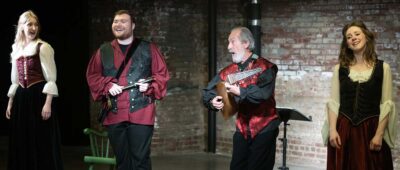
Three Merry Men/Hold Thy Peace (Twelfth Night, II.3, Aguecheek, Belch, Feste) Anonymous
Three Merry Men/Hold Thy Peace were popular silly ‘catches’ of the time. Elizabethans loved double entendres and Shakespeare took advantage of that when he inserted these tunes in the drunken madness of Sir Toby Belch. Settings of the texts with music exist in manuscript form for Three Merry Men. Hold thy peace was published by Thomas Ravencroft in 1609, but whether he actually wrote the tune is not known. This arrangement was performed live in concert by Anna Willson, Alex Lyons and Garald Farnham at El Barrio’s Artspace P.S. 109, NYC, on February 21, 2026.
Three merry men and three merry men
And three merry men be we.
I in the wood
And I on the ground
And Jack sleeps in a tree.
Hold thy peace! And I prithee hold thy peace
Thou knave! Hold thy peace thou knave.
Thou knave!
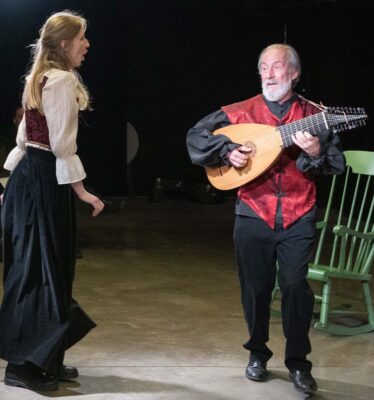
Under the Greenwood Tree (As You Like It, II.5, Amiens v1&2) set to John Bartlett 1606
No music survives for Under the Greenwood Tree. The lyrics were first paired with John Bartlett’s lute song by an English group in the 1950s. Garald used the original Bartlett source for the four vocal parts. This arrangement was performed live in concert by Laura Whittenberger, Anna Willson, Alex Lyons and Garald Farnham at El Barrio’s Artspace P.S. 109, NYC, on February 21, 2026.
Under the greenwood tree,
Who loves to lie with me,
And tune his merry Note
Unto the sweet Bird’s throat:
Come hither, come hither,
Here shall we see no enemy
But Winter and rough Weather.
Who doth ambition shun,
And loves to lie in the Sun:
Seeking the food he eats,
And please with what he gets:
Come hither, come hither,
Here shall we see no enemy
But Winter and rough Weather.
When That I Was a Little Tiny Boy (Twelfth Night, V.1, Feste) Anonymous
The traditional setting for When That I Was a Little Tiny Boy which we sing was in vogue by 1800. Although the text is definitely by Shakespeare, the original musical setting is lost. Garald arranged the 4-part vocals for the epilogue to Twelfth Night. This arrangement was performed live in concert by Alex Lyons, Laura Whittenberger, Garald Farnham and Anna Willson at El Barrio’s Artspace P.S. 109, NYC, on February 21, 2026.
Tenor: When that I was a little tiny boy,
With hey, ho, the wind and the rain;
A foolish thing was but a toy,
For the rain it raineth every day.
With hey, ho, the wind and the rain;
For the rain it raineth every day.
Soprano: But when I came to man’s estate
With hey, ho, the wind and the rain;
‘Gainst Knaves and Thieves men shut their gate,
For the rain it raineth every day.
With hey, ho …
Baritone: But when I came alas to wive,
With hey, ho, the wind and the rain;
By swaggering could I never thrive,
For the rain it raineth every day.
With hey, ho …
Alto: But when I came unto my beds,
With hey, ho, the wind and the rain;
With tosspots had they drunken heads
For the rain it raineth every day.
With hey, ho …
All: A great while ago the world begun,
With hey, ho, the wind and the rain;
But that’s all one, our play is done,
And we’ll strive to please you ev’ry day.
With hey, ho, the wind and the rain;
And we’ll strive to please you ev’ry day.